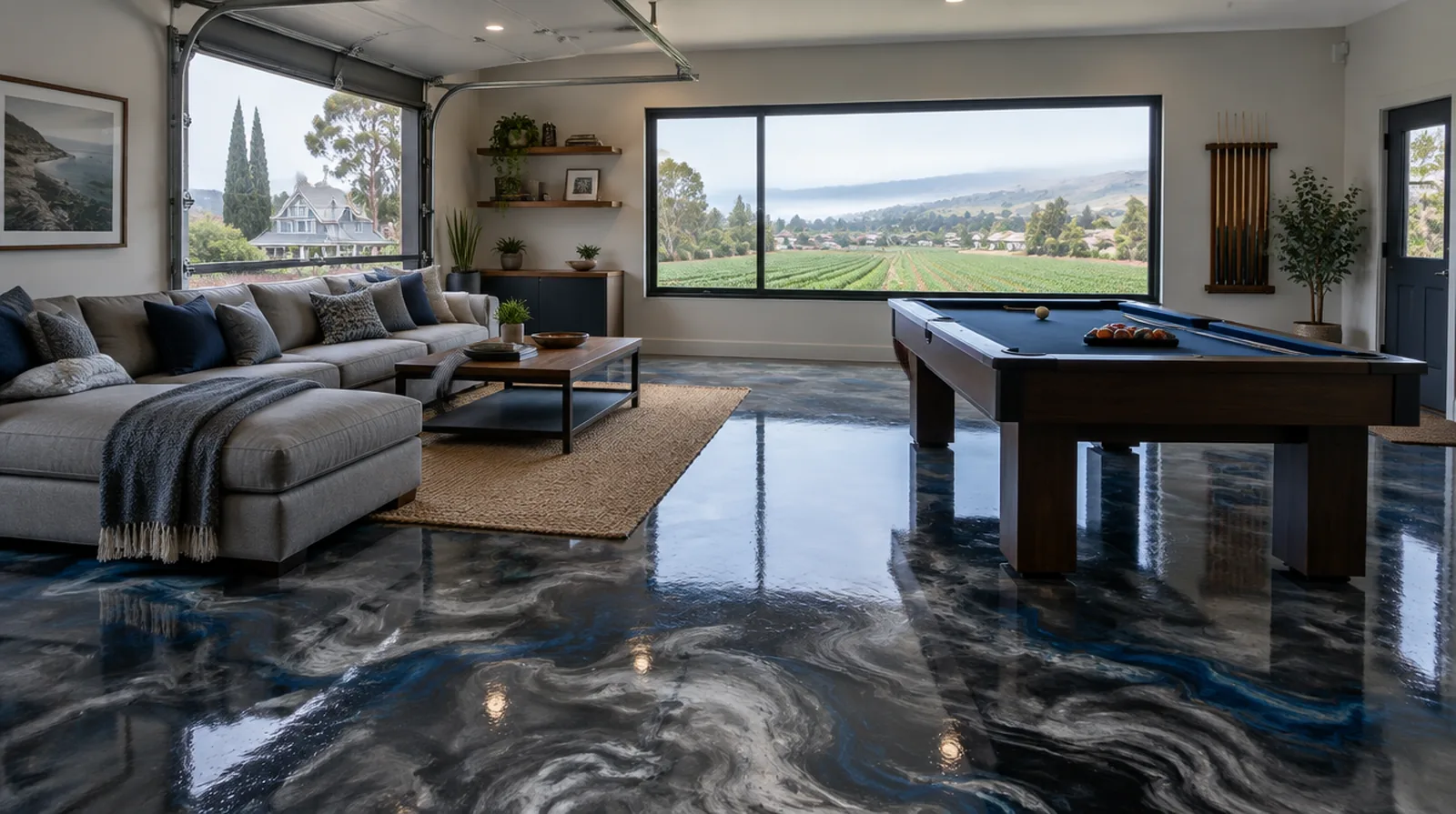
What makes metallic floors different
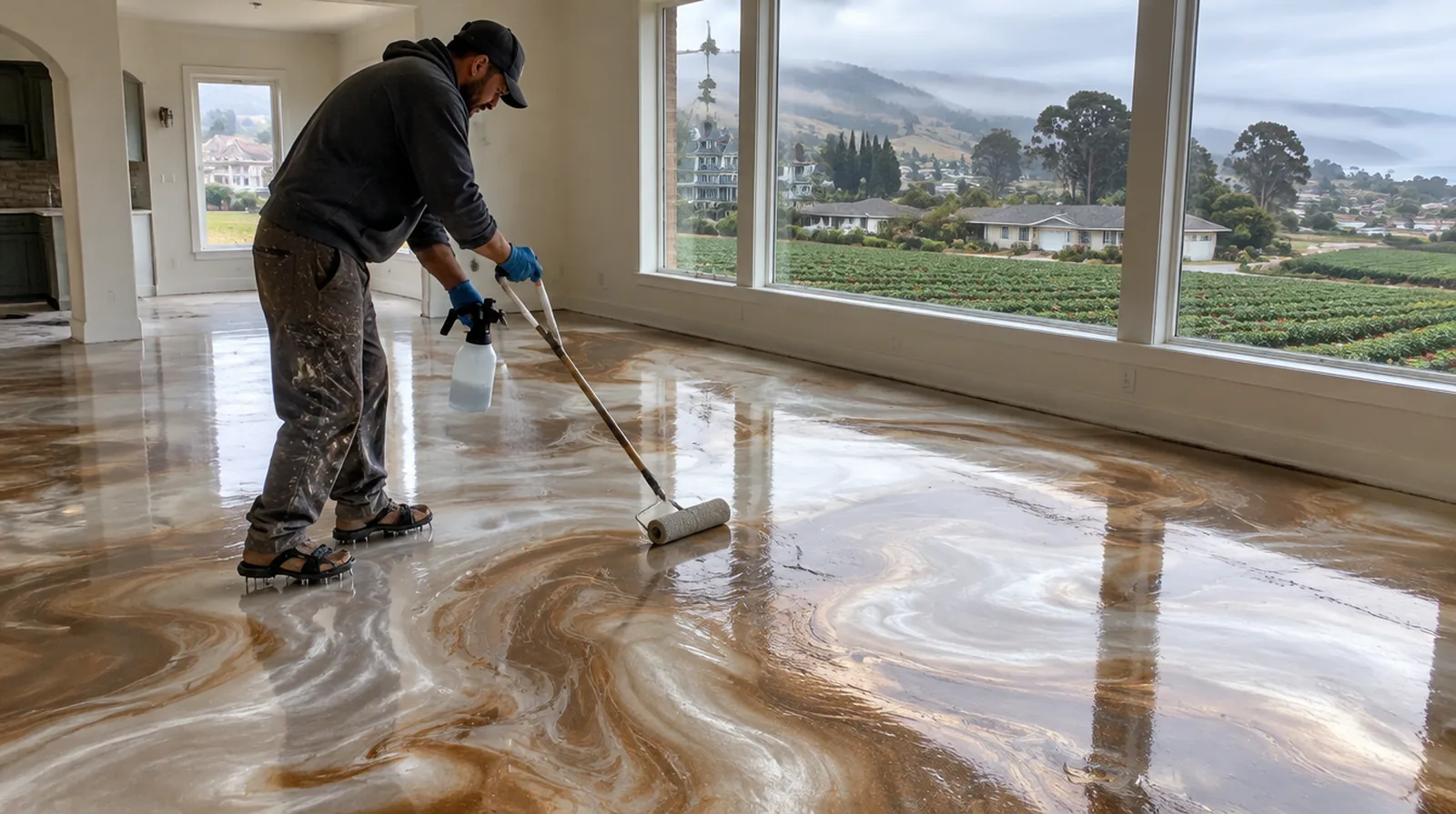
Metallic epoxy uses fine reflective pigments suspended in clear resin. While the resin is wet, the installer moves the pigment with rollers, brushes, solvent and air to create swirls, veins and depth. As it cures, light catches the pigment at different angles, so the floor shifts as you walk across it. No two floors look alike, and that is the point.
In a town where many rooms get soft, diffused light from the coastal sky, metallic floors have a special glow. They pick up whatever light comes through the windows and bounce it around the room.
Where it works
Garage conversions, bonus rooms, home bars, studios and basements are the most common residential spaces. In business, we install metallic floors in salons, barbershops, boutiques, tasting rooms, dental offices and showrooms. Car and motorcycle enthusiasts also like them for display garages.
How a metallic floor is built
Preparation
Metallic floors magnify every flaw underneath, so prep is thorough. We grind, fill every crack, patch every divot and, on damp slabs, prime with a vapor barrier. A level, smooth substrate is essential.
Base coat
A tinted base coat sets the background color and seals the surface.
Design coat
The metallic layer goes on in one continuous pour. We work the pattern while it is wet. This step takes skill and timing, and we plan the room layout so there are no lap lines.
Topcoat
A clear urethane or polyaspartic top adds scratch resistance and UV protection, and lets you choose a high gloss or a softer satin.
Color ideas
Charcoal and silver feel modern and industrial. Pearl and soft gold feel warm and elegant. Deep ocean blues and greens echo the bay. Copper and bronze look great in bars and tasting rooms. We can make test samples so you see colors in your space before committing.
Durability and care
Metallic floors are hard and seamless, but the high gloss shows scratches more than flake. We recommend felt pads under furniture, mats at entries and a soft dust mop. A satin topcoat hides fine wear better. When the top dulls after years of traffic, we can sand lightly and recoat without touching the design layer.
Questions
Can you match a specific look?
We can get close using color and technique, but every pour is unique.
How long does it take?
Usually three to four days including prep and cure.
Is it slippery?
High gloss can be. We add a fine anti-slip additive where needed.
Curious about a custom floor? Request a free consultation.
Small business storefronts
Shops along the downtown streets often occupy old buildings with tired floors under layers of tile and carpet. After removal, a metallic coating can turn the concrete into a showpiece that customers remember, at a cost below many tile or stone options.
Pairing with flake
Some owners do metallic in a converted bonus room and flake in the attached garage, giving each space its own personality with consistent quality throughout.
Planning the schedule
Because metallic work needs stable temperature and humidity, we plan around the weather and may run a dehumidifier or heater on cool foggy days to keep the cure on track.
We photograph each stage of the pour so you have a record of colors and products for any future touch-ups or matching work in another room.
Lighting matters
Metallic floors respond to light. Recessed fixtures and natural light bring out depth. We often suggest adjusting lighting at the same time for the best effect.
Get a metallic floor quote
Call (000) 000-0000 for a free estimate.