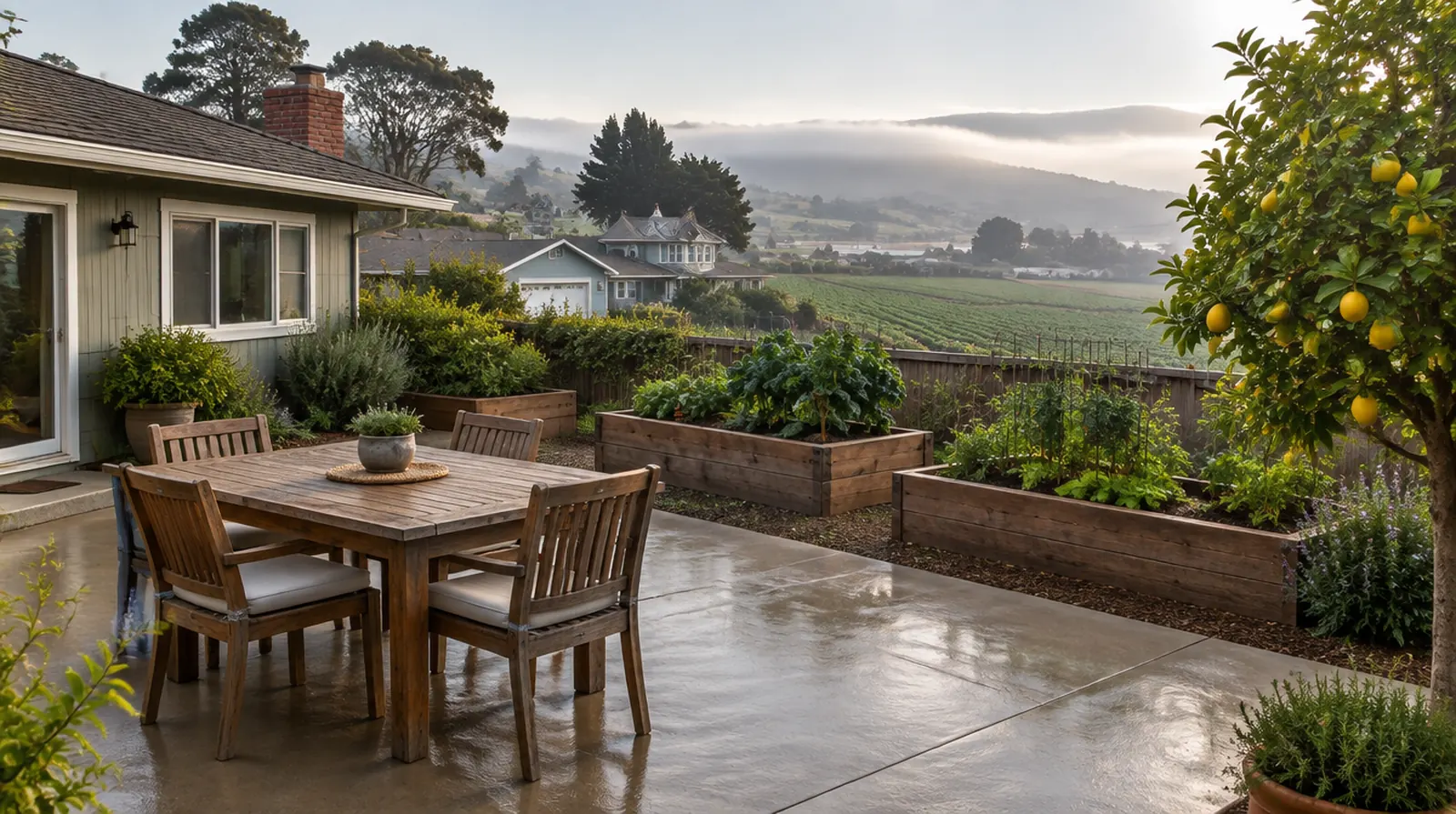
Why seal outdoor concrete here
Outdoor concrete in a foggy climate rarely dries out completely. Moisture sits in the pores, and moss, algae and black mildew move in, especially on shady north sides of homes and under large trees. Winter rain carries soil and tannins from leaves that stain the surface. Over years, the top layer softens and sheds sand. A quality sealer slows all of that by keeping water out and making the surface easier to clean.
Sealer types
Penetrating sealers
Silane and siloxane sealers soak into the concrete and repel water without changing the look. They are breathable, so moisture from below can escape, which makes them ideal for damp sites, walkways and driveways.
Film-forming sealers
Acrylic and urethane sealers sit on top and add a sheen or wet look. They enhance color on stamped or stained concrete but need recoating every few years.
Densifiers
Lithium silicate densifiers harden the surface and reduce dusting, often paired with a penetrating sealer.
Our process
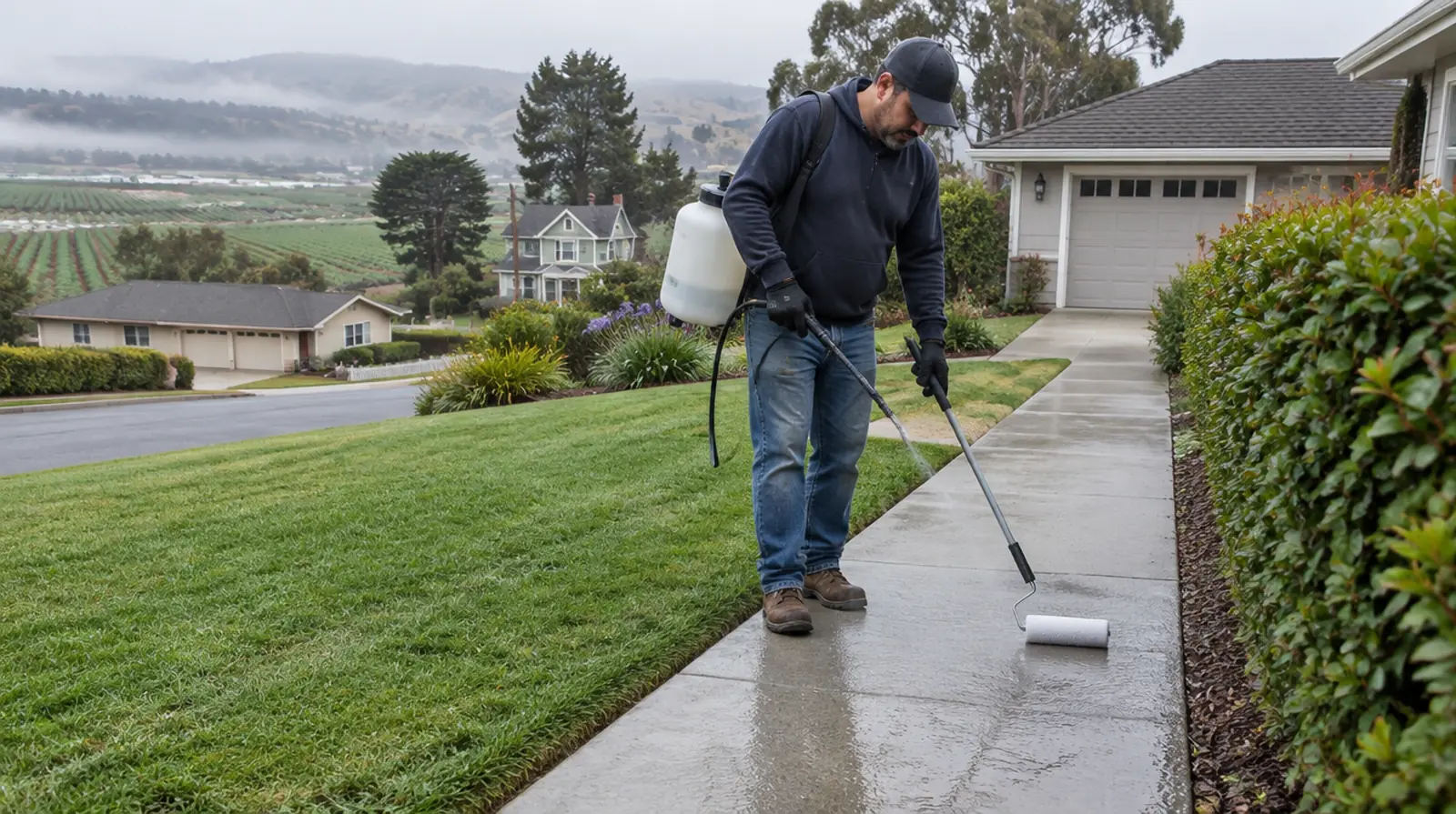
We pressure wash, treat moss and mildew, degrease oil spots and let the slab dry. In this climate that can mean waiting for a dry window, and we schedule sealing around the forecast. Then we apply sealer evenly by sprayer and roller and back-roll to avoid puddles.
What we seal
Patios, walkways, driveways, pool decks, steps, porches, garage aprons, stamped concrete, barn floors and commercial sidewalks. We also seal pavers and exposed aggregate.
Moss and mildew prevention
Sealing alone does not stop shade-loving growth, but it makes it much harder for spores to settle in the pores. We recommend trimming low branches, improving drainage and an occasional rinse. Sealed concrete cleans in a fraction of the time.
How often to reseal
Penetrating sealers last five to ten years. Film-forming sealers usually need refreshing every two to four years, depending on traffic and sun.
Questions
Will sealing make it slippery?
Penetrating sealers do not change traction. We add grit to film sealers on walking surfaces.
Can you seal new concrete?
Yes, after about a month of curing.
Will it remove existing stains?
We clean first, but deep stains may remain; sealing prevents new ones.
Ready to protect your concrete? Request a free estimate.
Farm and barn slabs
Equipment barns, feed rooms and wash areas see manure, fertilizer and constant moisture. A densifier and penetrating sealer harden the surface and reduce dust and staining at a low cost per square foot.
Stamped concrete refresh
Faded stamped patios regain their color and depth with cleaning and a fresh film-forming sealer.
Salt air
Homes closer to the coast see salt carried on the breeze, which can attack concrete and steel. Sealing reduces salt absorption.
Pool decks and spas
Pool decks see chlorine, sunscreen, wet feet and constant splashing. Unsealed decks absorb water and chemicals, leading to staining, spalling and slippery algae near the coping. We clean, repair and seal decks with breathable products that keep traction, and we recommend a recoat schedule based on how much the pool is used. Spa pads and outdoor shower areas get the same treatment.
Commercial sidewalks
Shops and offices with front walks want a clean entry. Gum, coffee and foot traffic darken unsealed concrete fast. Sealing makes routine pressure washing faster and keeps the entry presentable for customers.
Choosing a finish
If you like the natural gray look, a penetrating sealer leaves the concrete as it is. If you want color to pop on a stamped patio, a wet-look sealer deepens tones. We put small test patches down so you can compare before we do the whole area.
Get a sealing estimate
Call (000) 000-0000 for a free estimate.